
SAP PP Introduction
What is SAP PP?
SAP PP is the module in the SAP ERP system that helps companies plan, schedule, execute, and monitor production processes. It deals with master data (BOMs, work centers, routing), material planning (e.g. MRP), capacity planning, production orders, shop-floor control, and integration with other modules (like Materials Management, Quality, Finance, etc.).
In simple terms, SAP PP helps factories run their day-to-day manufacturing in an organized and efficient way.
Why is SAP PP Important?
Manufacturing companies deal with many moving parts—raw materials, machines, labor, schedules, and customer demands. SAP PP brings all these elements together in one system so that the business can:
- Plan production accurately
- Reduce material shortages
- Utilize machines and manpower effectively
- Deliver products on time
- Improve overall productivity and reduce costs
Key Features of SAP PP
- Material Requirement Planning (MRP) - MRP checks the demand for materials and automatically calculates what needs to be produced or purchased. It ensures there are no shortages or extra stock lying idle.
- Bill of Material (BOM) - A BOM is like a recipe for a product. It lists all components needed to make a finished product. SAP PP uses BOM to plan and execute production.
- Routing / Work Centers - Routing defines how to make a product — the steps, the machines, and the time required. Work centers represent physical locations like machines or labor groups where actual production happens.
- Production Orders - These are instructions to the shop floor to start manufacturing. A production order tracks the entire process — material consumption, machine time, labor time, and final product output.
- Capacity Planning - Ensures machines are not overloaded and production is scheduled realistically.
- Demand Management (Planned Independent Requirements - PIR) - Companies create forecasts of what they expect to sell, and SAP PP converts these forecasts into planned production quantities.
How SAP PP Works (Simple Workflow)
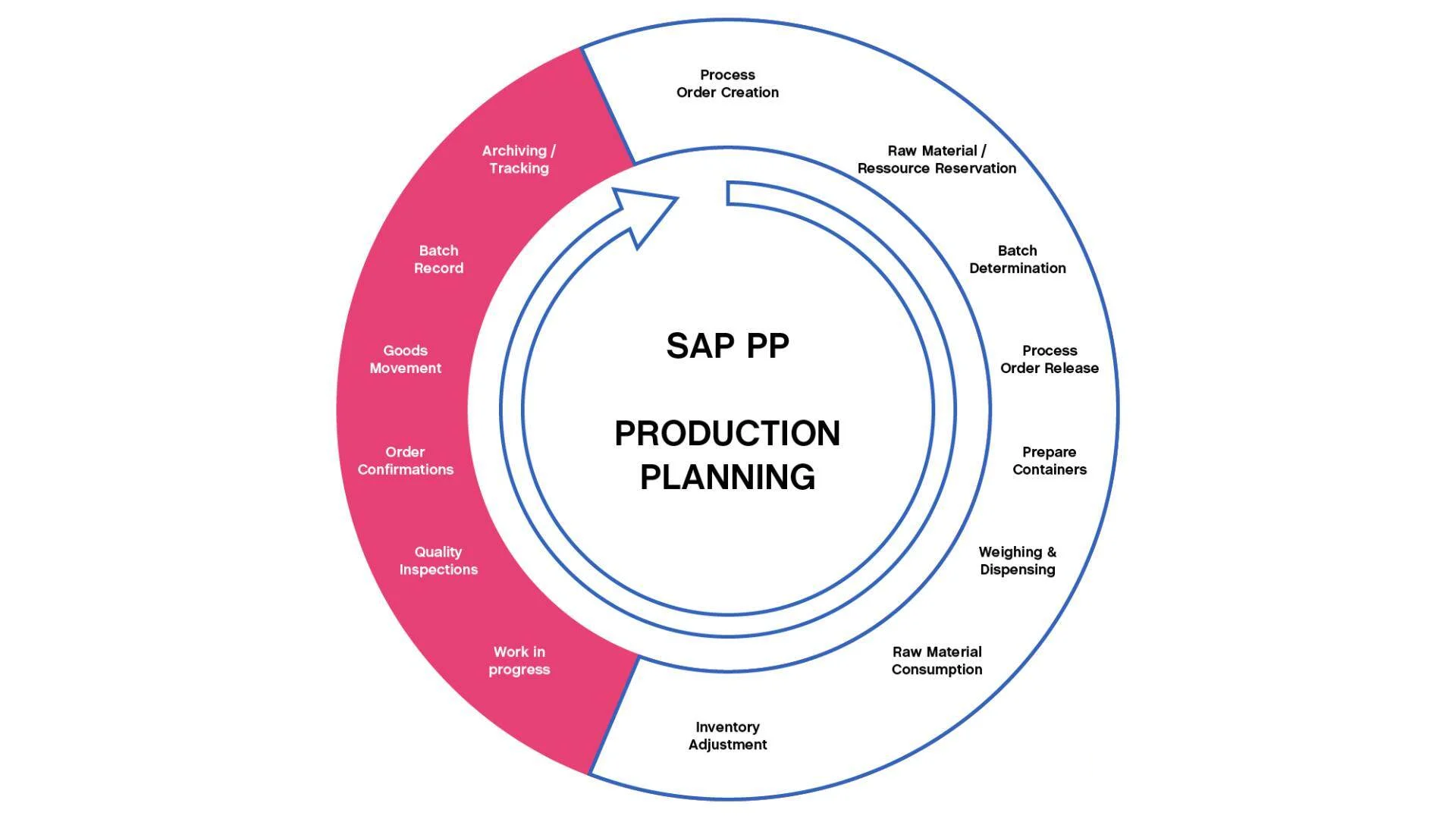
- Sales forecasts or customer orders are received
- Demand Management generates planned requirements
- MRP runs and creates planned orders/purchase requisitions
- Planner converts planned orders into production orders
- Materials are issued to production
- Production activities are carried out on shop floor
- Production order is confirmed
- Finished goods are received into stock
Who Uses SAP PP?
SAP PP is mainly used by:
- Production Planners
- Manufacturing Engineers
- Material Planners
- Plant Managers
- Shop Floor Supervisors
Integration of SAP PP with Other Modules
Production does not work alone. SAP PP connects closely with:
- MM (Materials Management) – for raw materials purchasing
- SD (Sales & Distribution) – for sales orders and demand
- FI/CO (Finance & Controlling) – to track production costs
- QM (Quality Management) – for inspection during manufacturing
- PM (Plant Maintenance) – for machine availability
Prerequisites to Learn SAP PP
You don’t need to be a manufacturing expert, but a basic understanding of these concepts helps:
- How products are made in a factory
- Basic idea of materials, machines, and work centers
- Simple knowledge of SAP navigation (optional but useful)
- Curiosity to understand how planning works in real companies
Even with no prior SAP experience, beginners can understand SAP PP step by step.